





V&A Waterfront's precinct sustainability investment underpins two 5-Star Green Star hotel ratings
Cape Town EDITION and InterContinental Table Bay demonstrate how shared water, energy and cooling infrastructure can support more responsible tourism and strengthen long-term resilience.

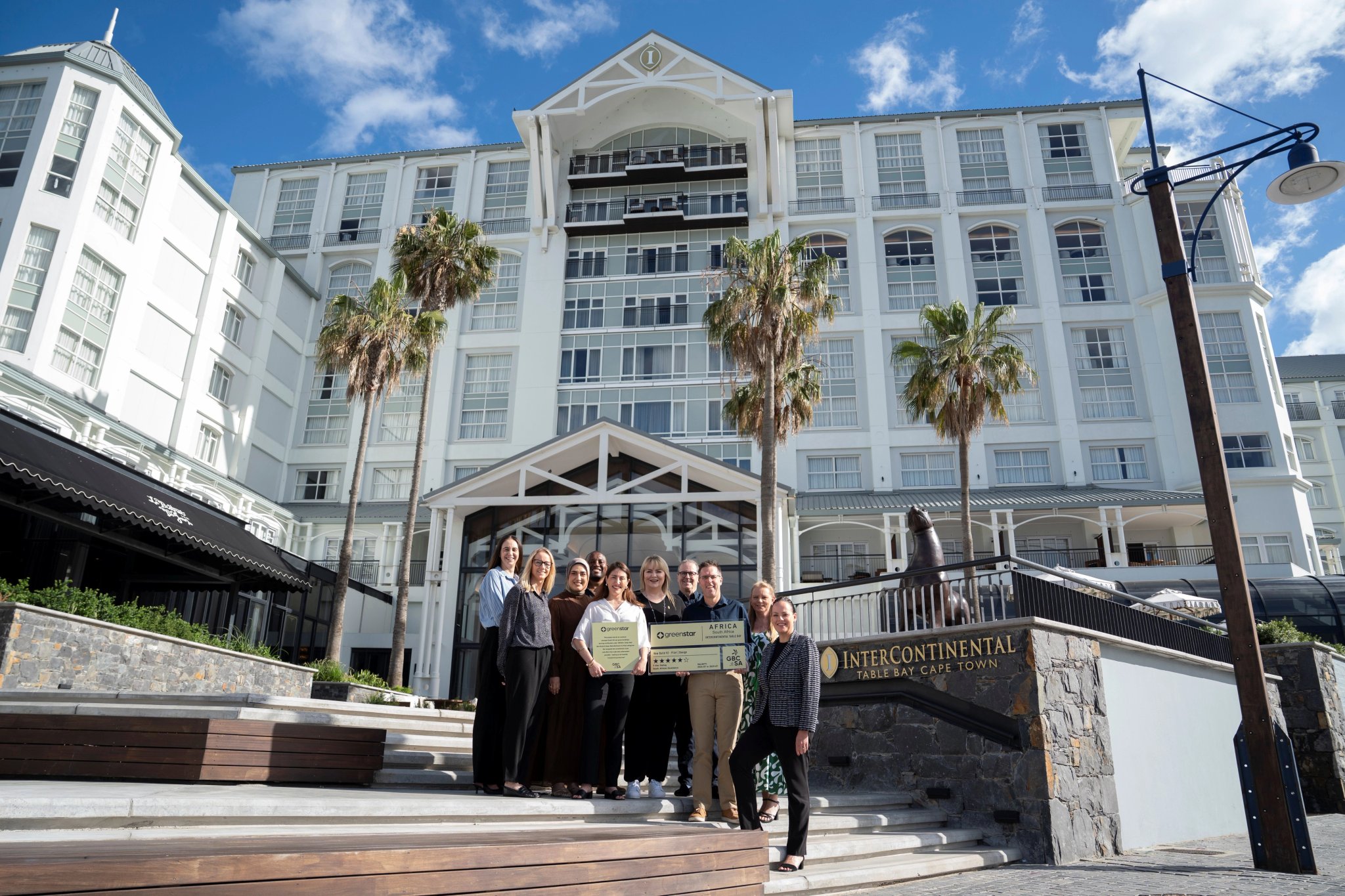
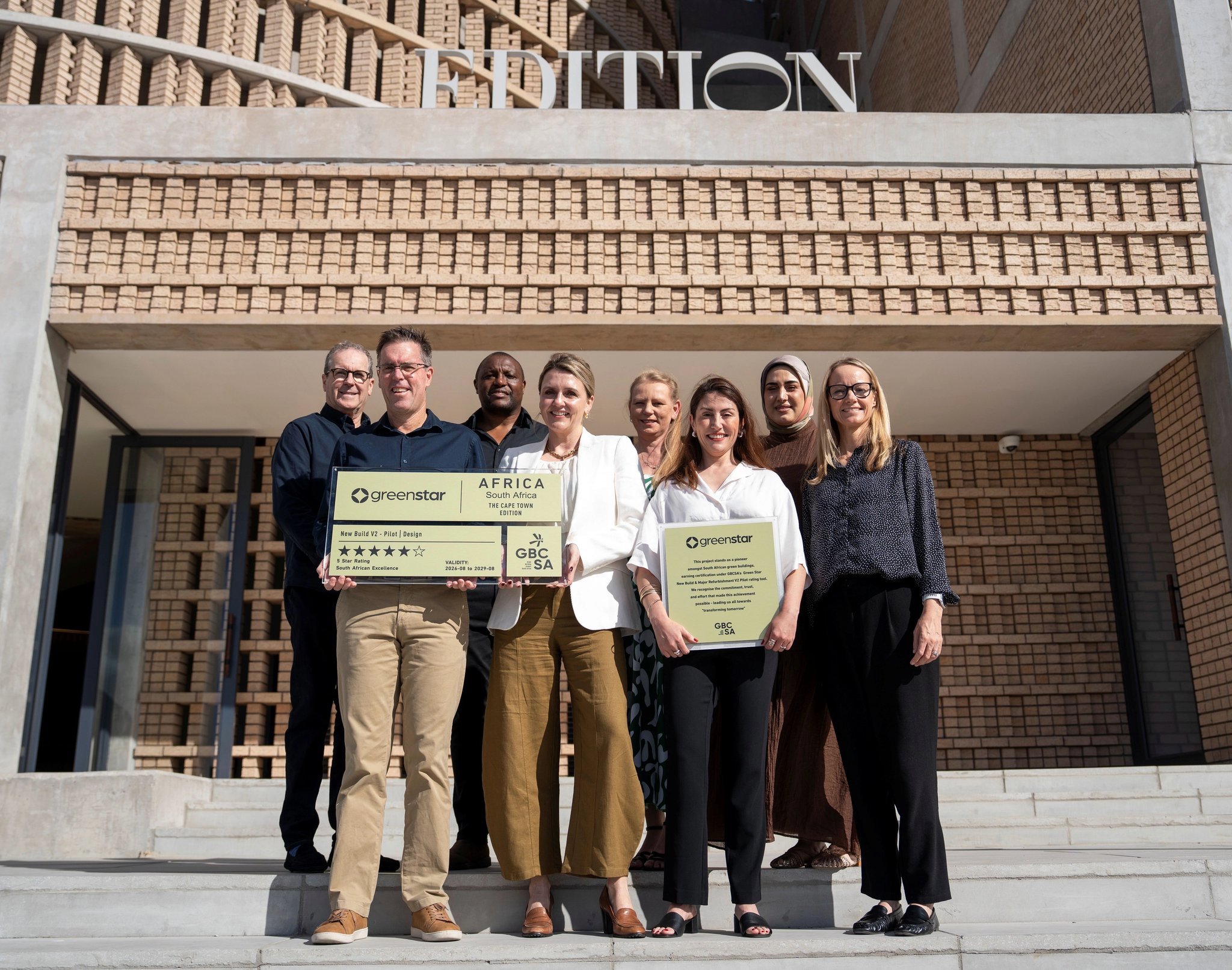
From left to right: Melissa Hugo, (InterContinental Table Bay: Hotel Manager), Kirstin Goosen (V&A Waterfront: Head of Developments), Wardah Safi (Green Building Council of South Africa: Technical Manager), Allan Nenguke (V&A Waterfront, Executive Manager: Development), Georgina Smit (Green Building Council of South Africa: CEO), Joanne Selby (InterContinental Table Bay: General Manager), Sean Montgomery (V&A Waterfront: Development Director: Granger Bay), Graham Wood (V&A Waterfront: Chief Executive Officer), Ann-Mari Nell (Green Building Council of South Africa: Certifications Operations Manager) and Subeth Booysen (InterContinental Table Bay: Head of Sales and Marketing).
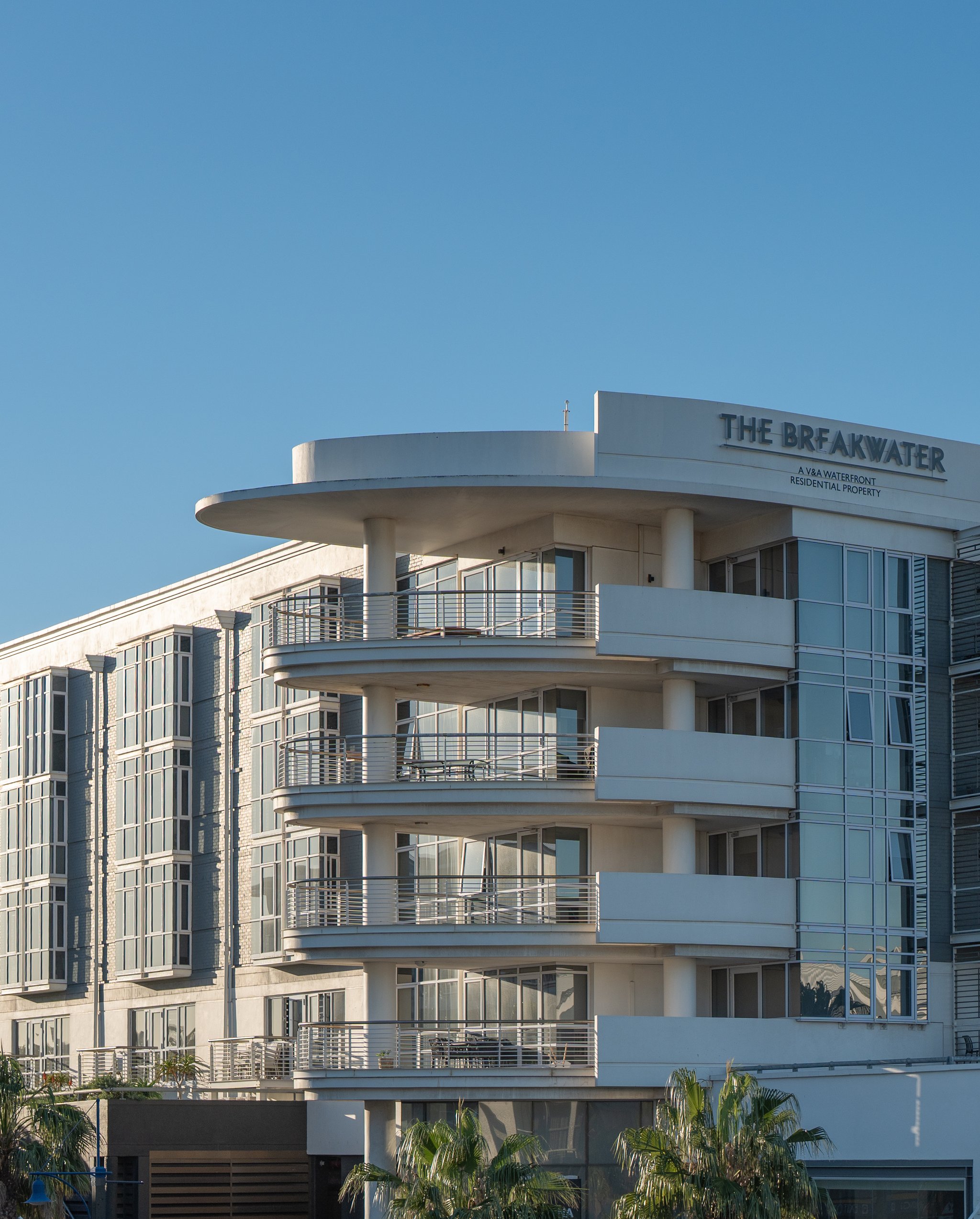
Cape Town, 17 November 2026. Cape Town EDITION and InterContinental Table Bay at the V&A Waterfront have each achieved a 5-Star Green Star SA design rating, providing new evidence of how the Waterfront's long-term investment in shared infrastructure is improving the sustainability and resilience of individual developments across the precinct.
The two hotels are among the first four projects in South Africa certified under the Green Building Council of South Africa (GBCSA) Green Star SA New Build & Major Refurbishment V2 Pilot tool. Cape Town EDITION scored 52 points and InterContinental Table Bay 55 points, against the 35 points required for a 5-Star rating, which Green Star SA classifies as South African Excellence.
Green Star is considered the defining standard for leadership when it comes to green buildings in South Africa. Because of its holistic approach to sustainability, beyond energy and water, it recognises the precinct-scale systems a building relies on. Both hotels benefit from water, cooling and energy infrastructure developed by the V&A Waterfront for buildings across the precinct to share.
The ratings recognise three shared precinct systems:
- Desalinated water. The Waterfront's desalination plant on East Pier produces enough potable water to supply more than 80% of the precinct's monthly water needs, reducing reliance on a constrained municipal supply.
- District seawater cooling. Seawater heat exchangers remove heat from the air-conditioning systems serving Victoria Wharf, InterContinental Table Bay and Cape Town EDITION, enabling the hotels' chillers to operate more efficiently than comparable standalone systems.
- Off-site renewable energy. Through wheeling agreements, renewable electricity generated off-site is transmitted to the precinct over the grid, supplying up to 70% of the Waterfront's annual energy needs.
V&A Waterfront CEO Graham Wood says: "For more than a decade, the Waterfront has invested in water, cooling and energy infrastructure at a scale no single building could justify on its own. Green Star V2 allows that investment to be recognised at the level of each building. For our partners, investors and visitors, that matters: developments connected to the precinct start with an advantage in resource efficiency and resilience, and that advantage becomes more valuable as water and energy security grow more pressing for Cape Town."
CEO Georgina Smit says: “The V&A Waterfront has a long history of demonstrating ambition and leadership in the green building space. These latest certifications are further testament to its visionary, long-term approach to precinct development - one that looks beyond individual buildings to consider wider environmental and social benefits, including creating opportunities for Capetonians to access and enjoy this important destination.
“We are grateful to the Waterfront for partnering with us in developing the next generation of Green Star rating tools, and to sustainability consultancies Solid Green and Sow & Reap for piloting the tool alongside the project teams. Their collective contribution is an excellent example of collaboration to deliver local and industry tested solutions.”
The ratings also strengthen the Waterfront's responsible tourism proposition. They demonstrate how environmental performance can be embedded in the destination and the visitor experience, rather than relying on each hotel to solve water, energy and resource challenges independently. Guests can access premium hospitality supported by shared systems designed to reduce resource demand and improve resilience, while each property contributes its own building-specific measures.
Responsible refurbishment at InterContinental Table Bay

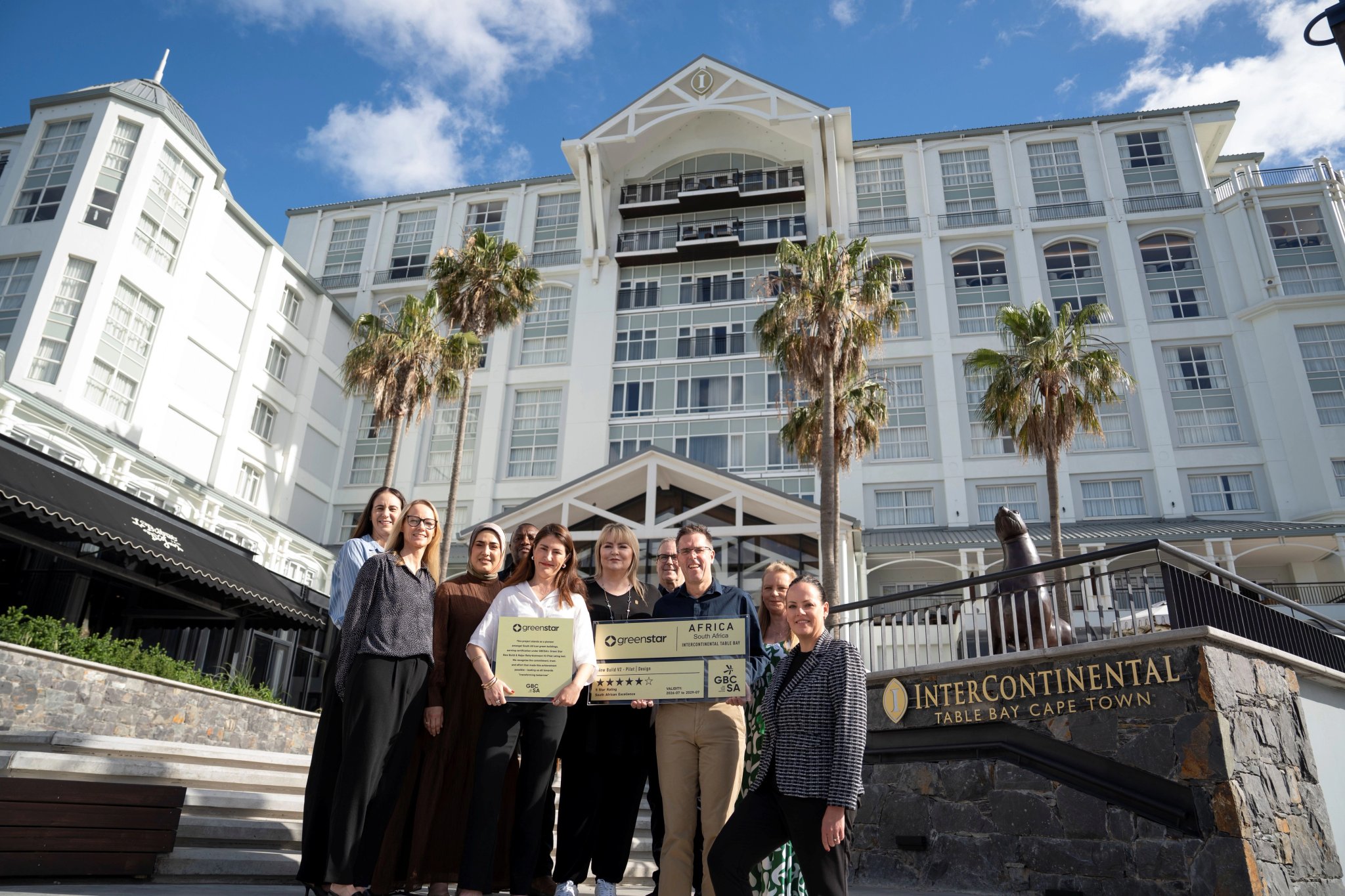
From left to right: Melissa Hugo, (InterContinental Table Bay: Hotel Manager), Kirstin Goosen (V&A Waterfront: Head of Developments), Wardah Safi (Green Building Council of South Africa: Technical Manager), Allan Nenguke (V&A Waterfront, Executive Manager: Development), Georgina Smit (Green Building Council of South Africa: CEO), Joanne Selby (InterContinental Table Bay: General Manager), Sean Montgomery (V&A Waterfront: Development Director: Granger Bay), Graham Wood (V&A Waterfront: Chief Executive Officer), Ann-Mari Nell (Green Building Council of South Africa: Certifications Operations Manager) and Subeth Booysen (InterContinental Table Bay: Head of Sales and Marketing).
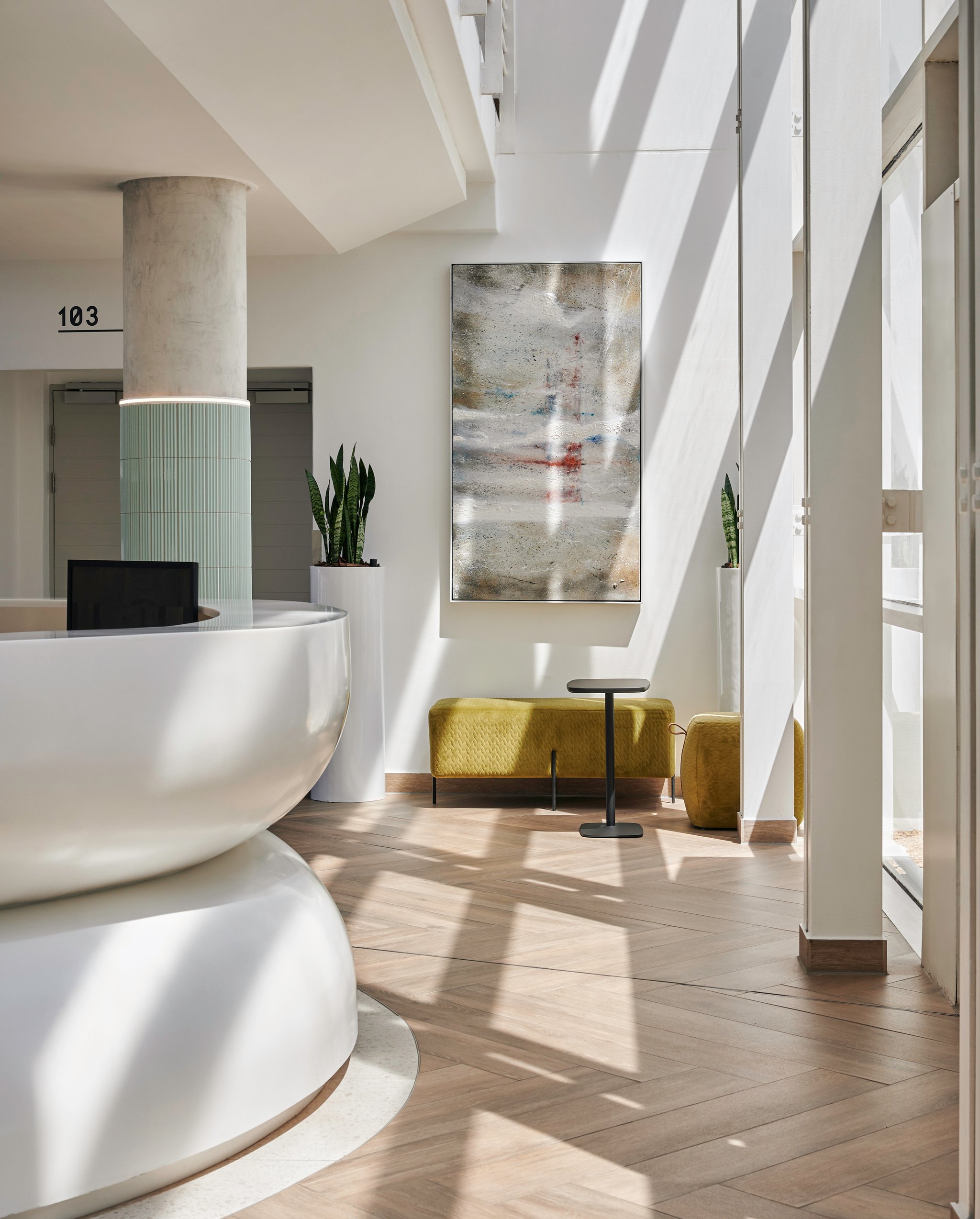
InterContinental Table Bay reopened after an 18-month transformation that retained the building's original core framework, brickwork and facade, avoiding much of the embodied carbon associated with demolition and new construction. Mature trees and plants were relocated and reused, while sustainability signage supports self-guided and guided learning for guests.
The project aimed for net-zero construction waste. Although this was not fully achieved because of limited industry capacity to process the volumes involved, alternative uses were found for a significant portion of the material. Carpets were donated to community partners, including the Astra School for Learners with Special Educational Needs, and thousands of square metres of paving were prepared for reuse elsewhere in the precinct.
Responsible new development at Cape Town EDITION

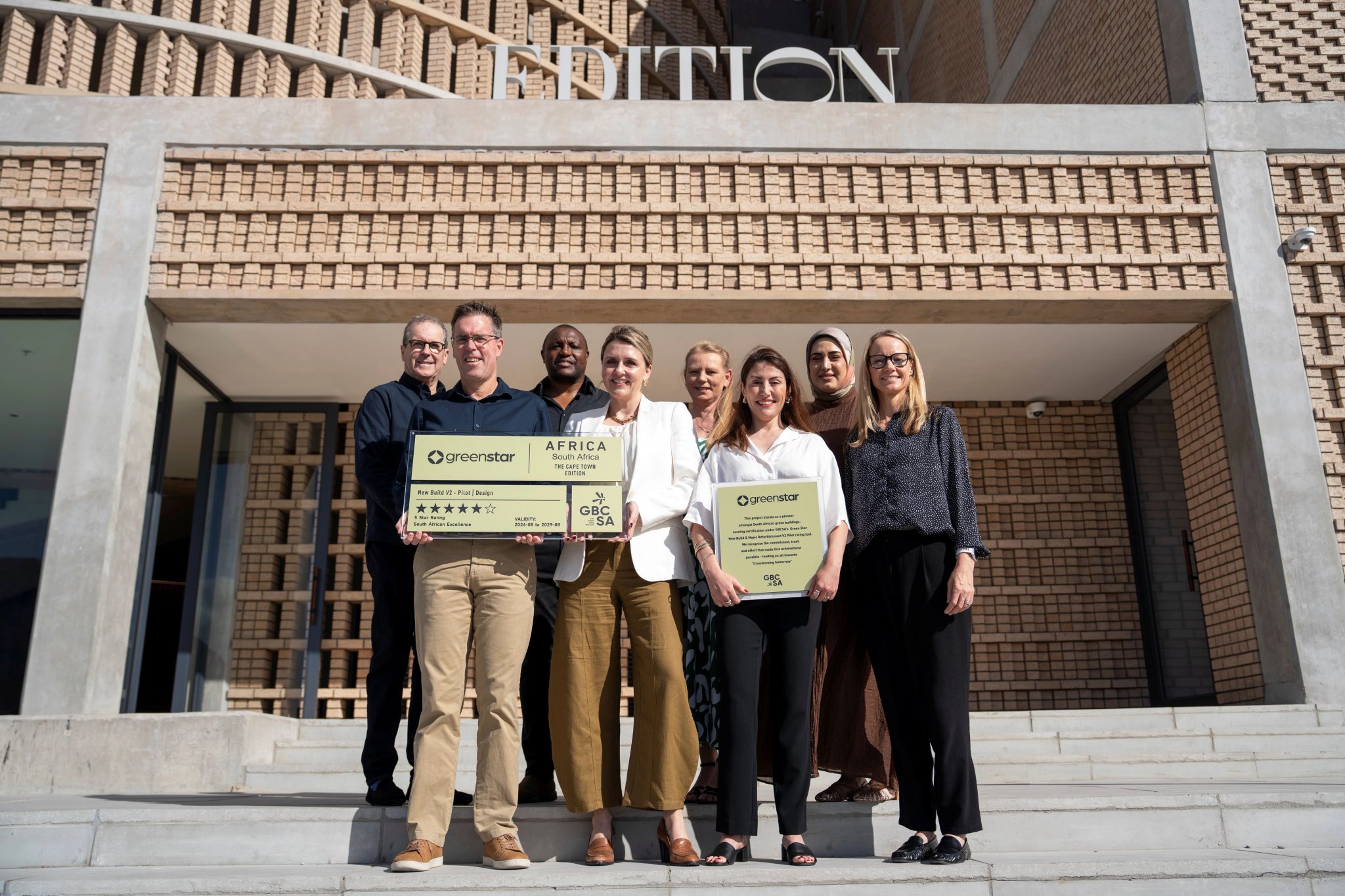
From left to right: Sean Montgomery (V&A Waterfront: Development Director: Granger Bay), Graham Wood (V&A Waterfront: Chief Executive Officer), Allan Nenguke (V&A Waterfront, Executive Manager: Development), Leonie Andereya (The Cape Town EDITION: General Manager), Ann-Mari Nell (Green Building Council of South Africa: Certifications Operations Manager), Georgina Smit (Green Building Council of South Africa: CEO), Wardah Safi (Green Building Council of South Africa: Technical Manager) and Kirstin Goosen (V&A Waterfront: Head of Developments).

Cape Town EDITION, the new hotel and private residences on Quay 7, was designed from the outset to connect to the precinct infrastructure. Design-stage modelling estimates a 75% improvement in water performance against the Green Star baseline, including the benefit of desalinated water, and a 43% improvement in energy performance before off-site renewable electricity is counted. These are modelled estimates and actual consumption will be measured once the building is fully operational.
The structural engineers compared four floor systems and selected post-tensioned concrete slabs as the option with the lowest embodied carbon. Exposed concrete and brickwork reduce the need for additional finishes over the life of the building. The design also prioritises indoor air quality, daylight, acoustic comfort, low-toxicity materials, sustainable mobility and measures to reduce the urban heat-island effect.
A retained heritage wall and harbour cranes connect the development to the character of the working harbour, while an independent commissioning process, comprehensive water and energy metering and a 12-month tuning period will be used to monitor and refine building performance.
Wood says: "One rating is for the transformation of an existing hotel and the other for a new development. Together they show that the precinct approach can support more responsible tourism across both existing assets and future growth. Sustainability is not being added to each development from scratch; it is increasingly embedded in the infrastructure and operating model of the Waterfront itself."
Both ratings were awarded at the design certification stage. Independent GBCSA assessors reviewed each hotel's design documentation and confirmed that the planned sustainability measures meet the 5-Star standard. Each project must achieve As Built certification within three years to confirm that the measures assessed at design stage have been delivered.
The certifications add to the V&A Waterfront's portfolio of 30 Green Star-rated buildings and support its commitment that all major new developments achieve a minimum 4-Star Green Star rating.
Other articles
View all newsGet in touch
We’d love to hear from you.
Whether you’re exploring a new career with us, interested in becoming a tenant or business partner, or just have a question, we’re here to help.